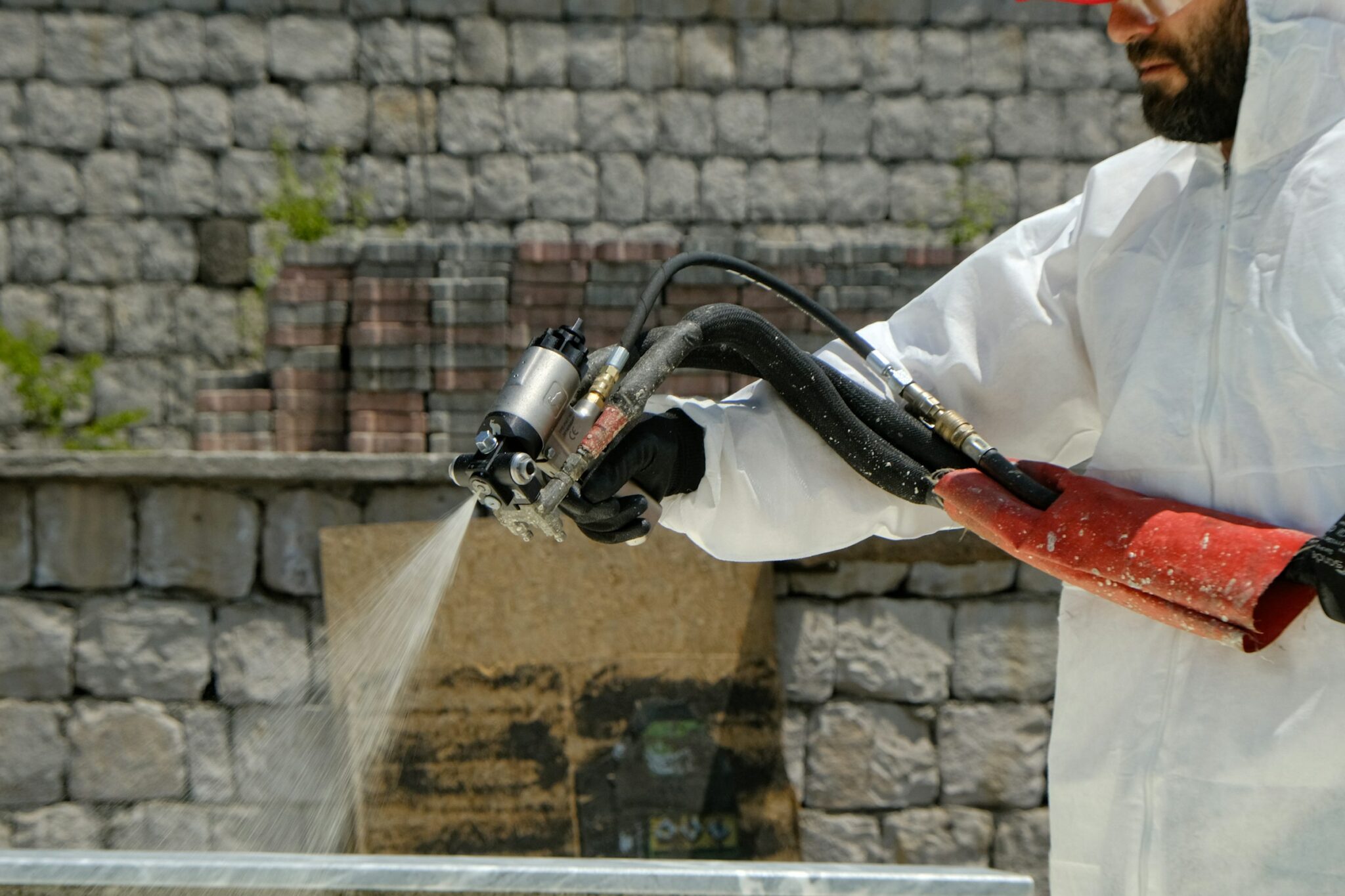
Seamless. Flexible. Back in service fast.
Why spray-applied polyurea has become a go-to lining for secondary containment — and how it compares to epoxy, sheet liners and bare concrete.
Gel time, not days of cure
Polyurea reacts almost instantly when the two components meet at the gun. Crews can typically walk on it within minutes and build full thickness in multiple passes the same day.
Zero seams
One continuous membrane — no welded seams or laps to fail.
High elongation
Many systems stretch several hundred percent, bridging cracks as concrete moves.
Wide application window
Less sensitive to cold and humidity than many coatings, so the season runs longer.
Thick in one visit
Build heavy, uniform film thickness in a single mobilization.
Polyurea vs. the alternatives.
Every option has a place. Here’s how they typically stack up for containment linings.
| Spray polyurea | Epoxy coatings | HDPE / PVC sheet liners | Bare concrete | |
|---|---|---|---|---|
| Seams & joints | Seamless | Seamless, but rigid | Welded seams at every panel | Control joints & cracks |
| Crack bridging | Excellent — highly flexible | Limited — can crack with substrate | Good when loose-laid | None |
| Return to service | Minutes to hours | Often 1–7 days | Fast once installed | — |
| Complex shapes | Sprays any contour | Good | Difficult around penetrations | — |
| Application conditions | Wide temperature & humidity range | Narrower window | Weather-dependent welding | — |
| Chemical resistance | Broad — select system per chemical | Very good; novolacs for strong acids | Very good for many chemicals | Porous; attacked by acids |
| Equipment needed | Plural-component spray rig | Rollers / airless sprayer | Welding equipment | — |
General comparison. Performance varies by product, thickness, preparation and exposure — always follow the manufacturer’s data sheets.
Matched to what’s in the tank.
No coating resists everything. Professionals select the system for each job based on the chemical, its concentration, temperature and how long a spill would sit.
- Fuels & oils — diesel, gasoline, lubricants and hydraulic oils.
- Agricultural products — many fertilizers and crop-protection chemicals.
- Acids & caustics — many dilute-to-moderate solutions, verified against resistance data.
- Aggressive chemicals — specialty topcoats where concentrated acids or strong solvents are present.
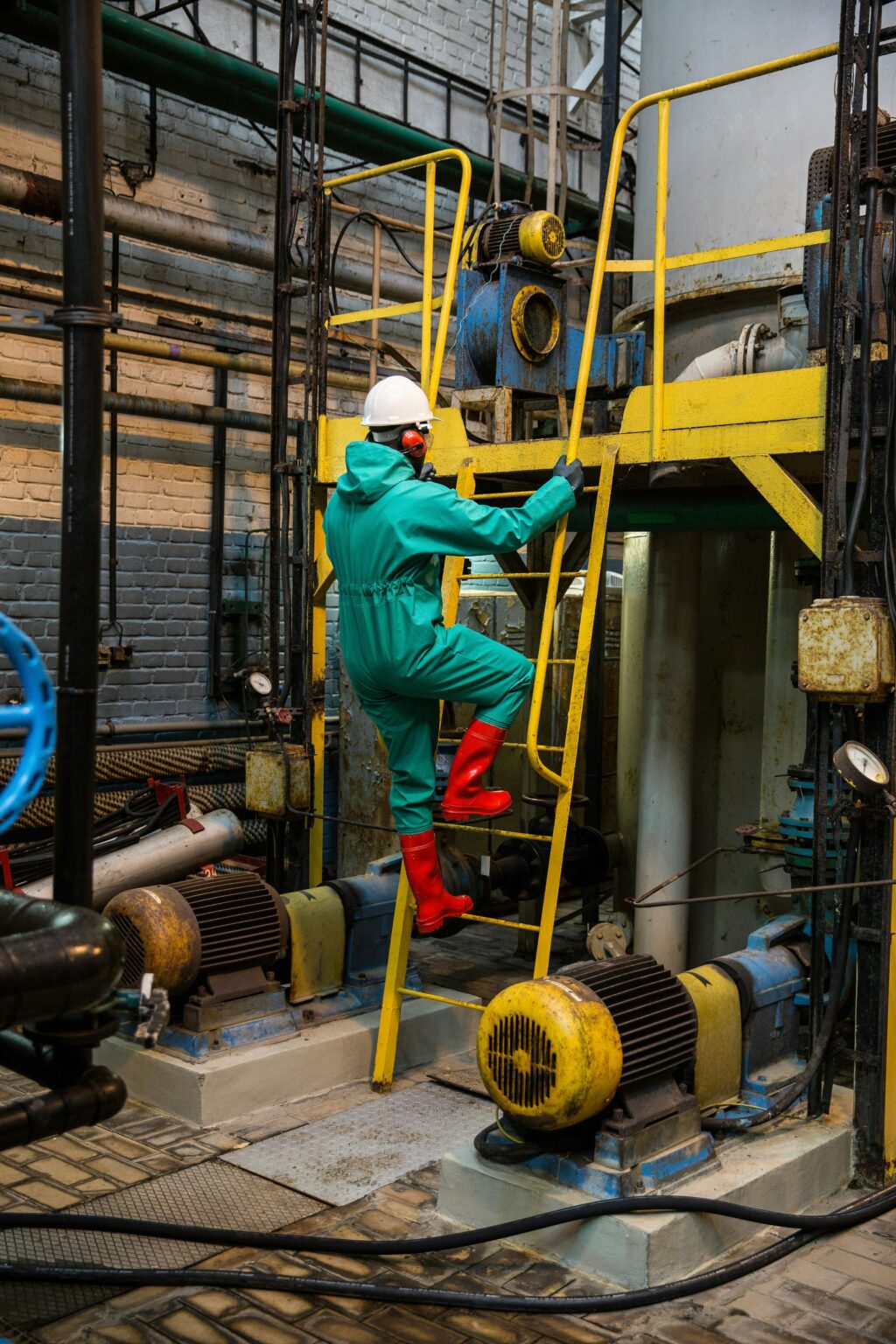
What a professional lining looks like.
Assess
Inspect the structure, identify chemicals, test moisture and measure the area.
Prepare
Grind or blast to profile, repair cracks and joints, clean and prime.
Spray
Apply polyurea in overlapping passes to the specified thickness, detailing every edge.
Verify
Check thickness, test for holidays, photograph and hand over a close-out report.
Learn to apply it — and get paid for it.
Training, rigs and a plan to start your own containment coating business.