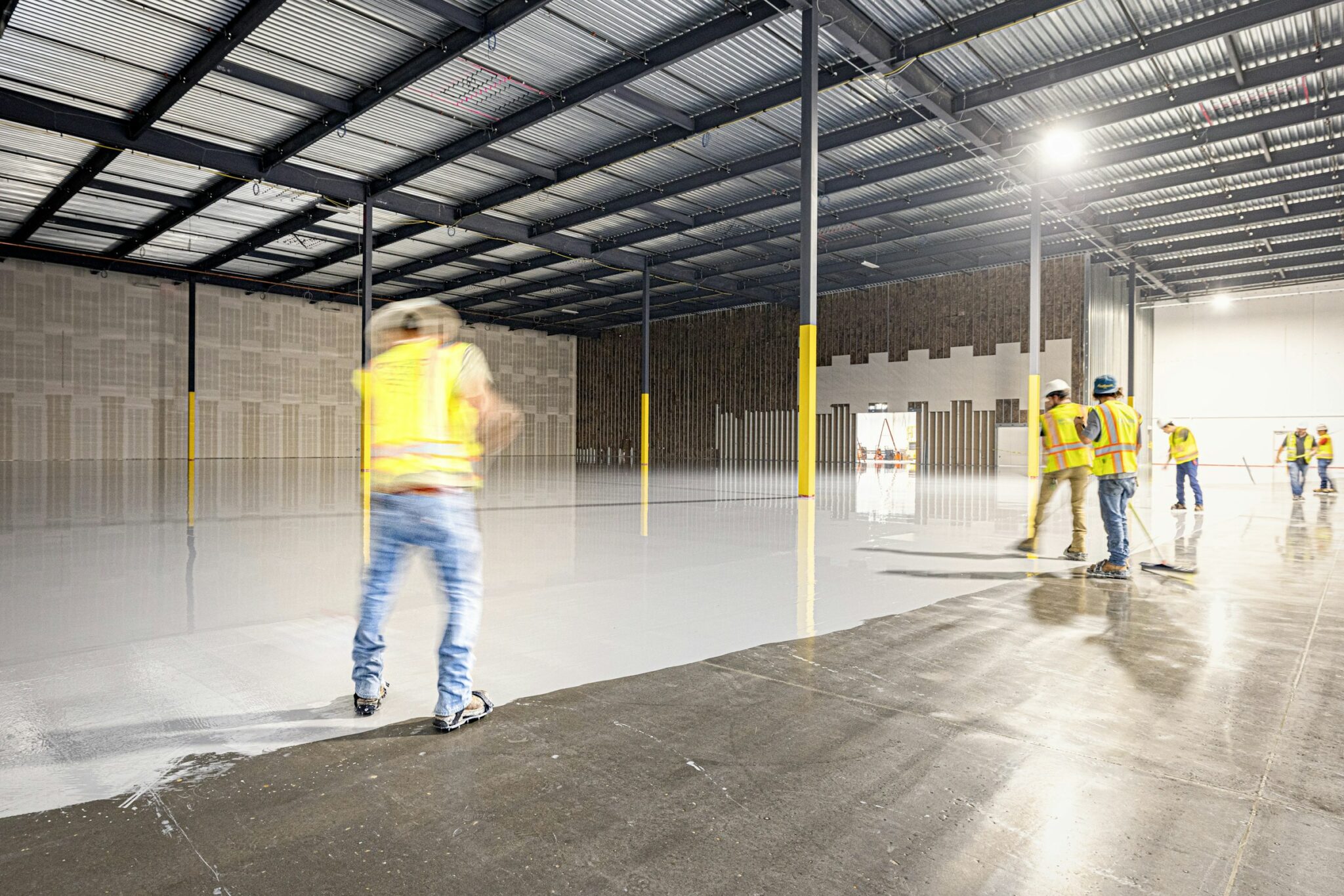
Start your own spill-containment coating business.
A practical, seven-step plan for launching a polyurea secondary-containment company — what to set up, what to buy, how to get trained and where your first customers come from.
Be your own boss
Own a specialized trade with real barriers to entry — not another commodity service.
Compliance-driven
Customers buy because regulators, insurers and inspectors require it.
Fully mobile
Your rig goes to the job. Serve a whole region from one base.
Room to grow
Expand into floors, roofs, truck beds, tanks and waterproofing with the same rig.
Seven steps to your first containment job.
Every market is different, but successful applicators tend to follow the same path.
Choose your lane
Decide whether you’ll be a containment specialist or add containment to an existing coatings, concrete or industrial-services business. Then look at who’s around you.
- Map fuel distributors, ag retailers, plants, utilities and fleets within a few hours’ drive.
- Find the environmental consultants and engineers who write SPCC Plans locally.
- Note which competitors line containment today — and with what.
Set up the business properly
Industrial customers vet their contractors. Being buttoned-up wins work.
- Form your entity, get an EIN and open a business bank account.
- Check state and local contractor licensing for coating and concrete work.
- Insurance: general liability, commercial auto, workers’ comp and — often requested — contractor’s pollution liability.
- Build a written safety program, including respiratory protection for spraying isocyanate-based coatings.
Get your spray rig
Polyurea is sprayed with a heated, high-pressure plural-component proportioner. A turnkey trailer rig puts everything you need in one place.
- ArmorThane’s standard 20′ rig: PMC PHX-40 proportioner, 45 kW generator, 23 CFM air compressor and 100 ft of hose.
- 24′ and 26′ gooseneck rigs for bigger crews and more storage.
- Add surface-prep tools: grinders, shot blaster or abrasive blasting, vacuums and moisture meters.
Get trained — and practice
Most coating failures trace back to surface prep, not the coating. Training teaches you to do it right the first time.
- Hands-on rig operation, maintenance and troubleshooting.
- Concrete and steel prep, crack repair, priming and moisture testing.
- Spray technique, thickness checks and holiday (pinhole) testing.
- Consider industry credentials such as AMPP coating applicator programs as you grow.
Price your work with confidence
Quote by the square foot of coated surface, add mobilization and prep, and know your margin before you bid.
- Measure floor, inside walls and wall tops — use our job estimator.
- Price surface prep separately when concrete is damaged or contaminated.
- Include a written spec: system, thickness and testing.
Land your first customers
Containment buyers are facility managers, EHS managers and the engineers who advise them. Go where they are.
- Introduce yourself to SPCC engineers and environmental consultants — they see the problems first.
- Call on fuel distributors, co-ops and tank installers in your area.
- Set up a Google Business Profile and a simple website with before-and-after photos.
- Offer a free containment condition assessment as your door-opener.
Deliver, document and grow
Hand every customer a close-out package — prep notes, thickness readings, test results and photos — for their compliance records. It’s what earns the next job.
- Offer annual inspection and touch-up programs for recurring revenue.
- Add a second crew or rig once your calendar fills.
- Cross-sell floors, truck pads, wash bays and tank linings.
How many jobs to break even?
Enter your own fixed costs and typical job to see what your calendar needs to look like.
Break-even planner
Plug in your own numbers to see how many jobs a month cover your fixed costs.
Jobs per month to break even
Everything beyond this is profit for your business.
- Gross profit per job—
- Square feet per month to break even—
- Annual profit at 4 jobs / month—
A planning tool, not a financial projection. Use your own quotes for equipment, insurance and materials — we're happy to help you build them.
You don’t have to figure it out alone.
When you start with ArmorThane, you’re working with a team that formulates the coatings, builds the rigs and trains applicators.
- Turnkey spray rigs configured for containment work.
- Hands-on training on equipment, prep and application.
- Proven polyurea systems with technical data and chemical-resistance guidance.
- Ongoing technical support when you hit a tricky job.

Let’s map out your business.
Tell us a little about yourself. We’ll follow up to talk through equipment, training, startup budget and how to win your first containment jobs.
Startup consultation request
Fields marked * are required.
Request received
Thanks! Your consultation request is in. A member of the team will reach out shortly to talk through your plans.